How to Get Beachy Waves on Short Hair (Step by Step)
The short answer
To get beachy waves on short hair, work in small sections with a 1-inch curling wand or flat iron, alternate the wave direction away from and toward your face, and leave the ends out for a lived-in finish. Rough-dry with a texturising or sea-salt spray first, curl on prepped hair, then break the waves apart with your fingers. On short lengths, bending rather than fully curling keeps the look soft rather than set.
Beachy waves are that undone, slightly tousled texture you'd get after a day by the sea — soft bends, a little grit at the roots, and ends that fall wherever they like. The good news for anyone with a bob, lob, shag or crop: short hair is genuinely easier to wave than long hair, because there's less weight pulling the bend out.
Here's exactly how to do it, whichever tools you own, plus the small stylist tricks that separate "styled" from "effortless."
Prep is where beach waves are actually won
The single biggest reason waves fall flat is skipping the prep. Beachy texture needs a little grip to hold, and freshly washed, conditioned hair is too smooth and slippery to keep a bend.
Start on dry or nearly dry hair. Second-day hair is your friend here — the natural oils give the wave something to grab. Mist a sea-salt spray or texturising spray through the mid-lengths and ends, scrunch it in, and let it settle for a minute before you pick up any tools.
Stylist tip: less product than you think, more evenly than you think. Over-spraying one patch makes it crunchy while the rest stays soft. Mist from about 20cm away, then scrunch upward toward your scalp.
How do you curl beachy waves with a wand or iron?
The core technique is simple: work in small sections, wrap loosely, and alternate the direction. On short hair you're aiming to bend the hair, not spiral it into ringlets.
Take sections roughly 2-3cm wide. Wrap each around a 1-inch wand, leaving the last 2-3cm of the ends sticking out — that "unfinished" tip is what reads as beachy rather than bouncy. Hold for a few seconds, then release into your palm and let it cool before it drops.
The direction trick matters most. Curl the sections around your face away from you, then alternate direction as you move back. Same-direction curls look uniform and set; alternating them looks like the sea did it.
Using a flat iron instead
No wand? A flat iron makes lovely waves and is often better on very short hair. Clamp near the root, rotate the iron a half-turn, and glide down slowly, flipping the direction as you go. That S-bend is the classic flat-iron beach wave, and it suits pixies and cropped bobs where a barrel is awkward.
Wand vs. flat iron vs. heatless: which suits your length?
Each method gives a slightly different finish. Here's how they compare on short hair.
| Method | Best for | Wave finish | Effort |
|---|---|---|---|
| 1-inch curling wand | Bobs and lobs | Soft, rounded, open waves | Medium |
| Flat iron | Pixies, crops, short bobs | Piecey S-bends, more control | Medium |
| Heatless (twists, rods) | Any length, damage-worried hair | Gentle, natural bend | Low, but overnight |
If your hair is fine or heat-damaged, the heatless route protects it and still delivers genuine texture. If you want it done in ten minutes, a wand or flat iron wins.
Can you get heatless beachy waves on short hair?
Absolutely, and short hair actually sets faster than long. Work on damp (not wet) hair with a little salt spray or leave-in through it.
Twist small sections away from your face and secure them — flexi-rods, pin curls, or fabric twists all work. A headband wrap is a favourite for bobs: put on a soft headband and wrap 2-3cm sections around it all the way round. Sleep on it, or let it air-dry for a couple of hours, then unwind and shake it out. The bend is softer than a heated wave, which is exactly the beachy point.
How to finish so it lasts all day
Finishing is what makes waves survive past lunch. Once every section has cooled, tip your head and rake your fingers through to break the curls into loose waves. Never brush — a brush erases the texture.
Add a second, light mist of texture spray at the roots for lived-in grit, then a whisper of flexible hairspray. For extra root lift on fine short hair, a pinch of dry shampoo or texture powder at the crown holds volume. On thicker or coarser hair, a drop of light oil on the ends stops the tips looking dry.
Match the waves to your cut
Different short cuts want slightly different waves:
- Bob or lob: full alternating waves, ends left out. This is the most classic beachy look.
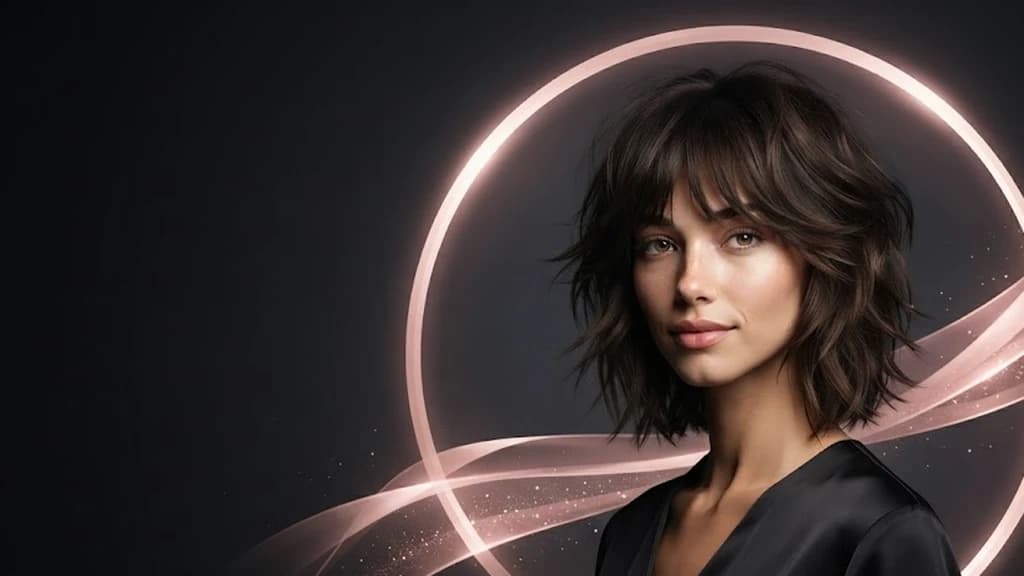
- Short shag: lean into the layers — loose bends plus your texture spray make the choppy shape look intentionally tousled.
- Pixie: skip full waves; use a flat iron to bend the top and sides into piecey movement instead.
See it on your own hair first
Not sure whether beachy waves will suit your current cut, or curious how they'd read on a bob versus a shag? You can preview short styles on your own photo before you touch a hot tool. Upload a selfie to the ShortHaircuts try-on, pick a textured short style, and see how the shape and movement sit on your face — your features stay exactly as they are, only the haircut changes. It's the easiest way to decide before you commit to the cut that makes waves look their best.
See it on your own face
Upload a selfie and preview the short shag in seconds — your face stays unchanged.
Frequently asked questions
How do you get beachy waves on short hair without heat?
Dampen your hair, mist in a sea-salt or texture spray, then twist small sections and pin or wrap them overnight — flexi-rods, a headband wrap or fabric twists all work on short lengths. Take them down in the morning and rough it up with your fingers for soft, heat-free waves.
What size curling iron is best for beach waves on short hair?
A 1-inch (25mm) barrel is the sweet spot for most short hair. It's small enough to grab short sections but large enough to leave a loose, open wave rather than a tight curl. For a pixie or very cropped bob, a flat iron or 3/4-inch wand gives more control.
Why won't my short hair hold beachy waves?
Usually it's clean, product-free hair that's too slippery, or waves set while still warm. Prep with a texture or salt spray, let each wave cool fully in your palm before releasing, and finish with a light hairspray. Fine hair holds better on second-day hair.
Can you get beachy waves on a bob or pixie?
Yes. A bob takes waves beautifully — alternate the direction and leave the ends straight. A pixie is more about bending the top and sides with a flat iron for piecey texture than making full waves. Both look effortless with the right texturising product.
Preview these on your photo
Keep reading
Short Haircuts AI previews are AI-generated illustrations to help you decide. Real salon results depend on your hair and your stylist. See our AI Disclaimer.